

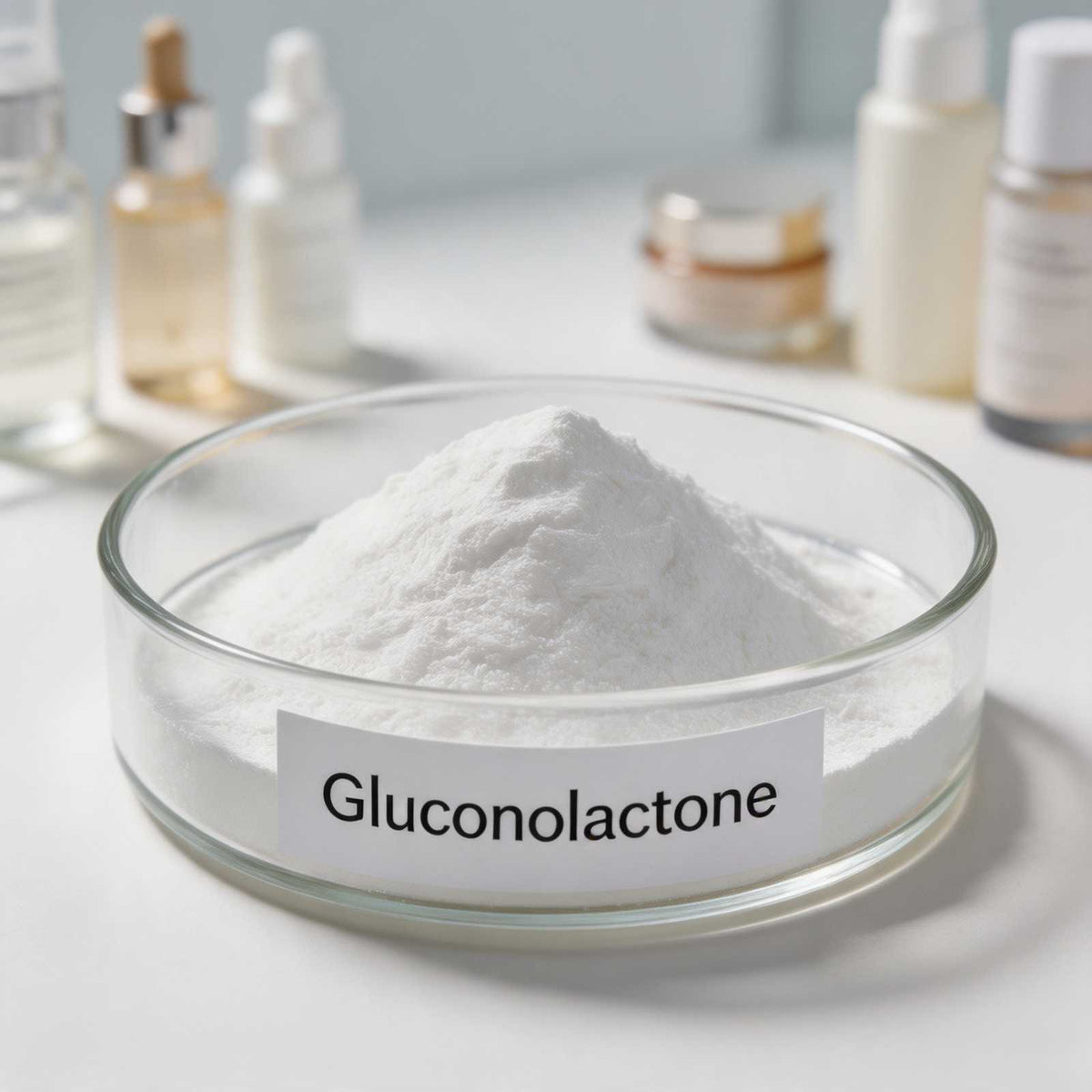
A high-purity polyhydroxy-acid (PHA) raw material for mild exfoliation, skin-conditioning and formulation pH management. This 99% white powder is well suited to controlled cosmetic development where formulators need a water-soluble ingredient that can gradually hydrolyze in aqueous systems, supporting PHA exfoliation concepts while also contributing to pH adjustment and metal-ion complexation depending on the formulation environment.
- 99% white powder for measured cosmetic formulation and R&D.
- Useful in mild exfoliation, smoother-looking skin and texture-refining product concepts.
- Water-soluble powder with pH-dependent behavior that formulators can engineer for the intended function.
- Paid small-pack evaluation and bulk-supply pathways support trial-to-scale purchasing.
Product Specifications / Key Facts
|
Property |
Product Information |
|
Product name |
Gluconolactone |
|
Commercial form |
White powder |
|
Purity / assay |
≥99% |
|
INCI |
Gluconolactone |
|
CAS Number |
90-80-2 for glucono-delta-lactone / cosmetic Gluconolactone identity; confirm against the current product grade. |
|
Molecular Formula |
C6H10O6 |
|
Molecular Weight |
178.14 g/mol |
|
Ingredient family |
Polyhydroxy acid (PHA) / gluconic acid lactone |
Key Benefits
Supports mild exfoliation concepts — Gluconolactone is commonly selected for PHA formulas designed to improve the appearance of rough surface texture and support smoother-looking skin.
Helps support skin conditioning — The ingredient is recognized in cosmetic use as a skin-conditioning material, making it relevant to formulas designed around softness, comfort and refined skin feel. [R2–R3]
Useful for pH-managed formulations — In water, gluconolactone gradually hydrolyzes toward gluconic acid / gluconate species, allowing formulators to use its acidification behavior in carefully designed systems. [R4]
Adds multifunctional formulation value — Depending on pH and formula design, gluconolactone can contribute to exfoliation, acidification and metal-ion complexation rather than serving only one formulation role. [R4]
Why Formulators Choose Gluconolactone
Gluconolactone is attractive when a formulation needs more than a simple acid powder. In aqueous media, it enters a pH-dependent equilibrium with gluconic acid and gluconate, so its behavior evolves after addition. That makes final pH timing important, but it also gives formulators useful flexibility: acidic conditions favor exfoliation-focused chemistry, while higher pH increases the share of gluconate species that can support complexation. [R4]
Typical Applications
- PHA exfoliating serums and toners
- Texture-refining and smoother-looking-skin treatments
- Hydrating / conditioning facial care
- Acidic creams and body lotions
- Shampoos, shower gels and other rinse-off systems
Quick Formulation Guide
|
Parameter |
Typical Formulation Guidance |
|
Use level |
approximately 5–15% [R4] |
|
Solubility / phase |
Freely soluble in water. [R4] |
|
pH behavior |
Gluconolactone gradually hydrolyzes in water, so the pH measured immediately after addition may not equal the final equilibrated pH. Check pH after processing and equilibration. [R4] |
|
Exfoliation pH direction |
Formulation guidance places mild exfoliating leave-on systems around pH 3.5–4.5, with pH around 3.6 maintaining meaningful amounts of acid / lactone species. [R4] |
|
Processing |
Higher temperature accelerates hydrolysis and pH drop. In pH-sensitive emulsions, final pH adjustment after emulsification is a practical development approach. [R4] |
|
Compatibility |
Low pH and added electrolyte from neutralization can affect emulsifiers, preservatives, surfactant viscosity and some polymers.[R4] |
Why Source From Us
- Start with samples scale to bulk orders – one supplier from trial to production: Validate with lab samples, then scale to commercial volumes – same quality, same team. No re-qualification, no project delays.
- Formulation support that actually helps – not just a data sheet: We give you hands-on guidance on solubility, temperature, pH, and compatibility. A real formulation partner, not a catalog.
- Reliable supply chain – consistent quality, on-time delivery, batch after batch: Own manufacturing facilities plus long-term partnerships with audited upstream producers ensure batch-to-batch consistency. Full documentation with every shipment. No "sample passes, bulk fails"
- Export-ready documentation – compliance, customs, cleared:Complete technical documentation packages – COA, MSDS, TDS, stability data – batch-specific and regulatory-ready. We handle the paperwork so your compliance and procurement teams can focus on formulation
Recommended Ingredient Pairings
|
Recommended Ingredient |
Why It Pairs Well |
Product Concept |
Compatibility Note |
|
Adds barrier-support and tone-care positioning to a broader routine. |
PHA exfoliating step + barrier-support follow-up |
Direct co-formulation requires pH and stability validation; separate-step architecture may be easier. |
|
|
Complements texture- and tone-focused development with a non-AHA active. |
Gentle texture + brightening system |
Validate pH, solubility and long-term stability in the complete formula. |
|
|
Adds hydration and skin-feel support around exfoliation-focused formulas. |
Hydrating PHA serum |
Low pH / electrolyte levels can affect polymer viscosity; test the selected molecular-weight grade. |
|
|
Supports soothing and conditioning positioning in PHA-centered facial or body care. |
Gentle exfoliating lotion / serum |
Confirm final pH and stability in the complete formula. |
Research & References
[R3] Cosmetic Ingredient Review — Safety Assessment of Glycolactones.
[R4] Jungbunzlauer — How to use Glucono-delta-Lactone in Personal Care.
Request a Quote
Tell us your required quantity, destination country, and any documentation needs. We usually reply within 1 business day.